Springs · Port Colborne
Garage Door Track Repair or Replacement in Port Colborne
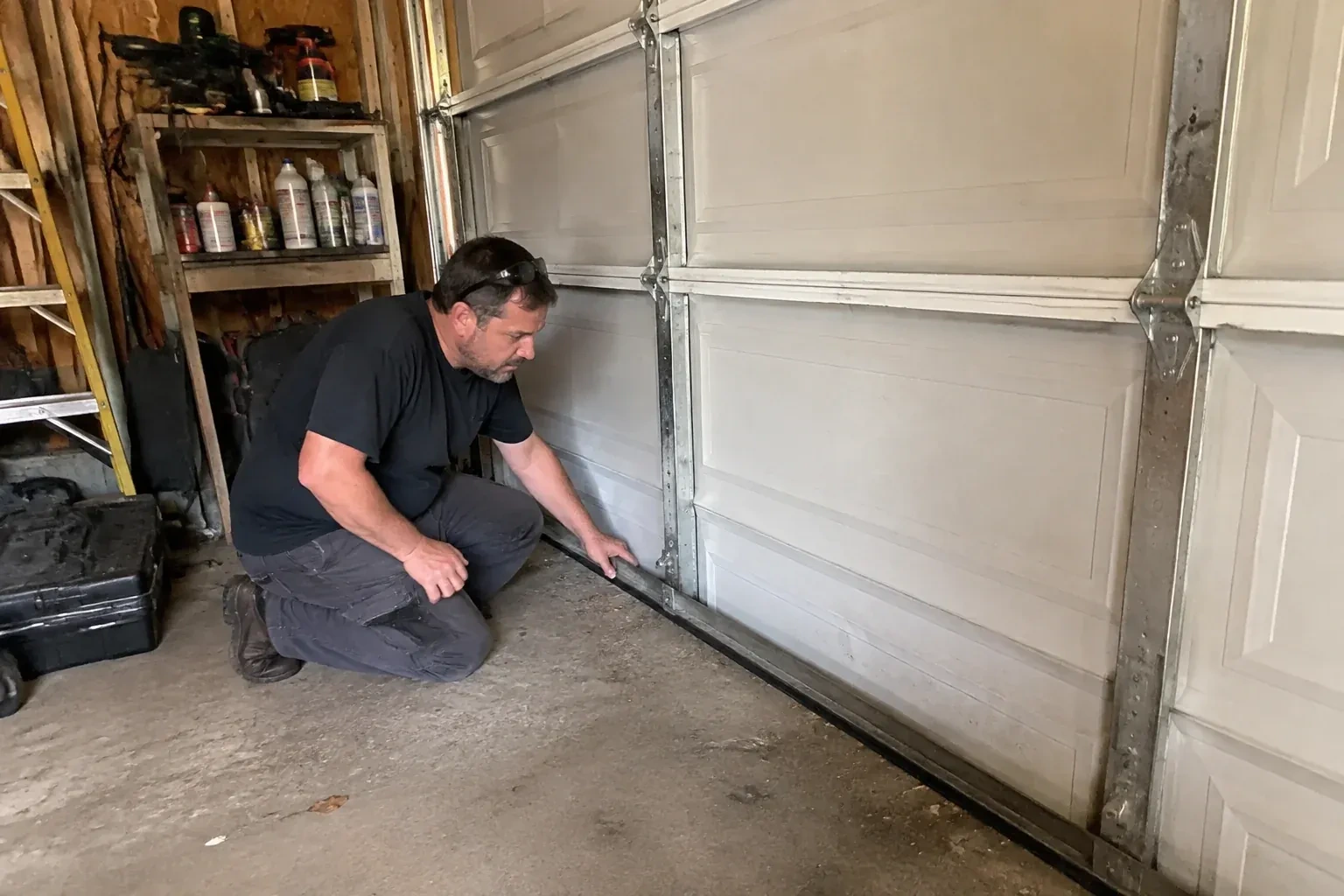
After a decade of slushy winters the bottom foot of the track is flaking rust. A roller squeals as it passes, and the channel edge has gone rough and thin where the salt collects.
Garage Door Track Repair or Replacement
In plain words
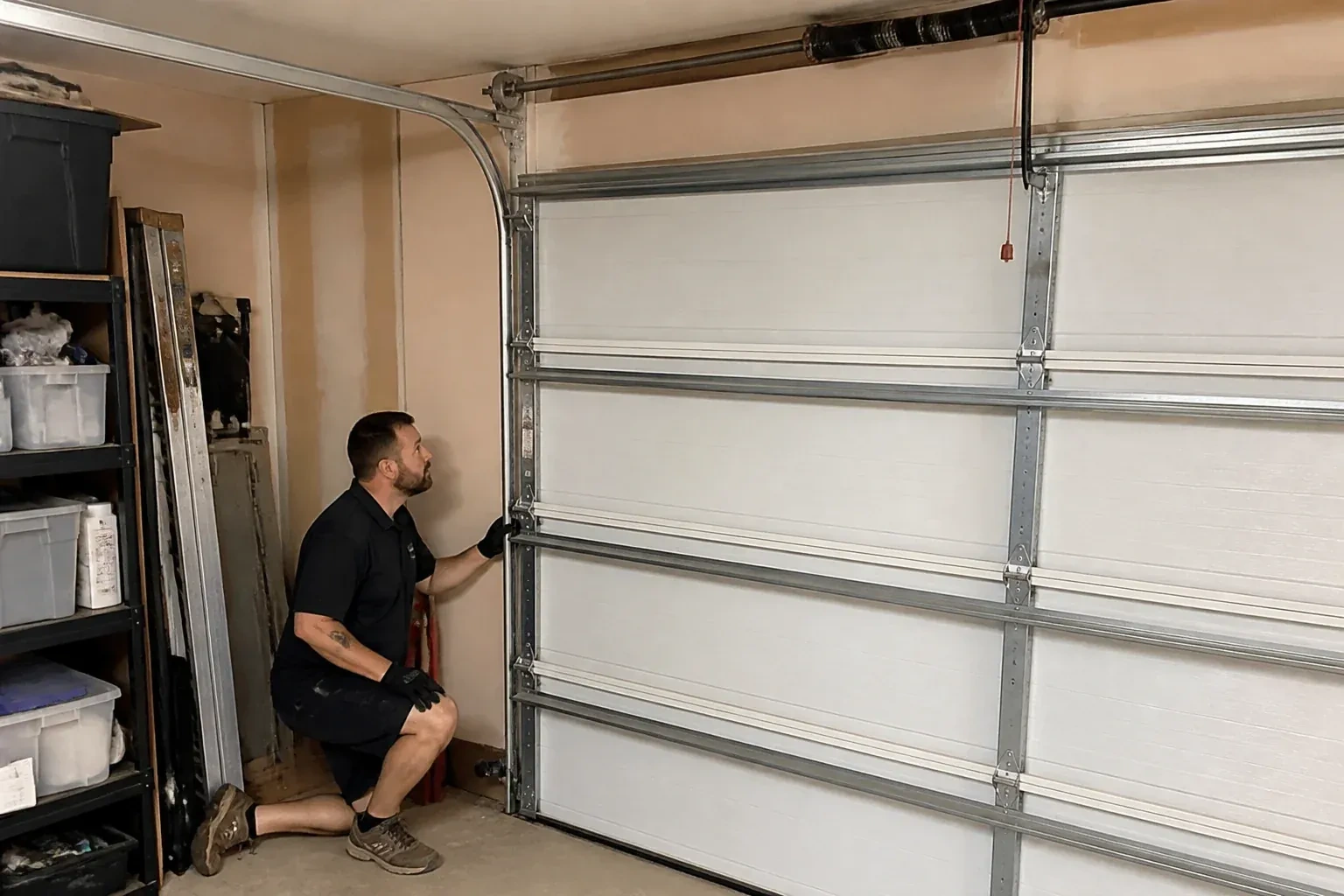
Vertical track is fixed to the jamb in one of two ways, and the assessment begins by reading which one your door has. Bracket-mounted track hangs on a few L-shaped jamb brackets, each lag-screwed into the wood, and can be shifted a little at each bracket to set spacing and plumb. Angle-mounted track uses a full-height continuous angle and is common where sideroom is tight. Either way the vertical run ends at a flag bracket that also carries the horizontal track and, on a torsion door, the spring shaft bearing. Track repair works with those fixings, tightening, replacing or repositioning them so the run sits true.
How the visit goesThe door climbs crooked, one side clearly ahead of the other. Nothing looks broken, but the two tracks sit different distances from the door, and one leans in toward the opening near the top.
Port Colborne
How the visit goes
Reading the track system
Track comes in families, and the replacement parts have to belong to the same one. The technician notes the profile, two-inch on nearly all residential doors and three-inch on some heavy ones, and the radius of the curve, typically 12 or 15 inches, which sets how much headroom the door uses. The layout is identified as standard lift, low-headroom dual track or high lift, and the vertical run as bracket-mounted or on a continuous angle. The spring type matters too, since a torsion shaft bearing usually rides on the flag bracket at the top of the vertical track. These details decide what is ordered and how the work is sequenced.
Rollers, hinges and fixtures damaged when the door bound
A door that has been catching on bad track usually has a few parts that suffered with it. Rollers with flat spots or bent stems are replaced, hinges that split when the door twisted are renewed, and top fixtures knocked out of line are reset so the top roller sits at the right depth. Each roller is confirmed to turn and slide freely. The channel is wiped clean of grit and old grease, and the moving parts are lubricated to the door's own manual, since track advice varies by maker. Attending to these pieces while the door is held and the track is fresh saves a second visit and stops the new alignment being chewed up by the old damage.
Jamb wood that will hold a screw again
If the visit included repairing the jamb, you now have sound timber behind every bracket, and the small habits that keep it that way are simple. Keep the bottom of the jamb dry: slush pushed clear, a bead of exterior caulk where the trim meets the slab, and paint or stain kept up on the exposed face. Look once a year for the tell-tale dark, soft patch at floor level and for screws that seem to have moved. A jamb that stays dry holds lag screws for decades, and with the track now fixed into good wood, the alignment set today has something solid to rest on.
Garage Door Track Repair or Replacement
In the van
- Track pliers and dead-blow hammer
- Flag brackets
- Lag screws and track bolts
- Replacement rollers and hinges
- Winding bars and track clamps
What affects the quote
Same fees day, night or weekend
1Bracket-mounted or continuous angle
Track on jamb brackets is adjusted bracket by bracket, while a full-height angle comes off and goes back as one piece. Each mounting style shapes the time and the fasteners quoted.
2Snow or ice around the track needing clearing first
A track buried under snow or glazed with ice has to be cleared before the technician can see what is actually bent or worn underneath. That extra step is common in winter and is worked into the visit rather than treated as a separate call.
3Springs that have to be unloaded
Work at the flag bracket or on the curve means winding the torsion springs down and back up. That adds time, and the quote says whether it applies to your repair.
Garage Door Track Repair or Replacement: questions
Will track work involve the springs?
Sometimes. The flag bracket at the top of the vertical track usually carries the bearing for the torsion shaft, so if that bracket or the curve has to move, the springs are unloaded first with winding bars and rewound afterwards to the same turns. Simple work on the vertical run below the curve, or on the horizontal hangers, can often be done with the springs left alone. Either way the door is balance-tested at the end.
Does a new piece of track have to match the rest of the set?
It does. Profile, gauge and radius all need to agree so a roller passes from old track to new without a step, and so both sides carry the door the same way. A two-inch track cannot mix with three-inch hardware, and a 12-inch curve beside a 15-inch one leaves the door meeting the horizontal run at two different heights. The technician measures the existing track and orders to it rather than to a general size.
What if the car hit the door as well as the track?
Then the assessment covers both. A bumper that creases the track usually dents or bows the bottom section, and can bend the bottom bracket, the roller stem and a hinge. The technician follows the impact through those parts, straightens or replaces the track, and explains separately what the section and its hardware need, whether that is a strut, a bracket, or a replacement panel. The door is only put back to work once the whole path is sound.
Springs & Hardware
- Garage Door Hinge ReplacementEvery time the door goes up there is a sharp pop from the same spot, about a metre off the floor…
- Garage Door Cable ReplacementThe door went up as usual this morning, then stopped a third of the way with one corner higher than…
- Torsion Spring ReplacementThe door starts to rise, gets about the height of your knee, then shudders and reverses.
Garage Door Track Repair or Replacement near you
If your door in Port Colborne is doing something new, there is a service here for it. Grinding usually points to rollers or hinges. A door that will not lift points to a spring or cable. A door that reverses on its own points to sensors or force settings. We diagnose first, then repair.