New Doors · Port Colborne
Commercial Sectional Door Repair
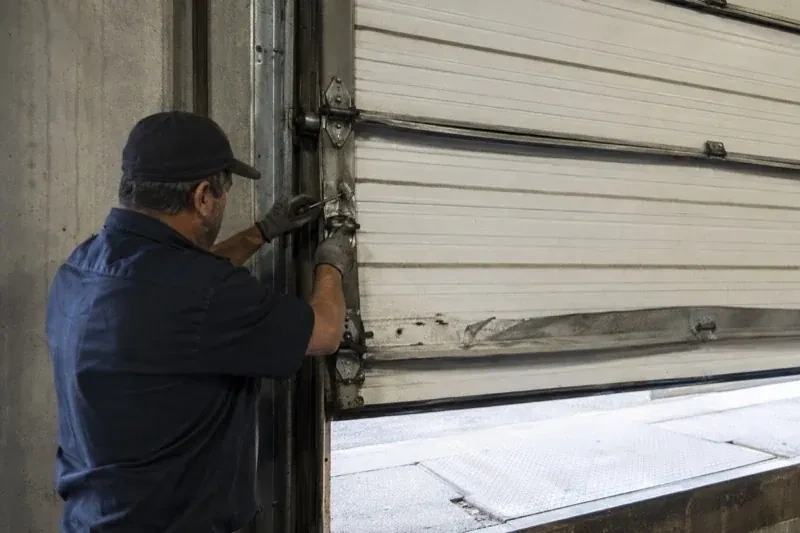
Each opening cycle brings a metallic knock followed by a shudder through the horizontal track. The sound grows near the curve, where a worn roller and loose hinge allow the section to shift under load.
Commercial Sectional Door Repair
In plain words
When a bay door hangs crooked, the visible angle is often only the starting clue. A technician compares cable tension on both sides, checks how each cable sits on its drum, examines bottom fixtures and looks for a shifted track or damaged roller. The door is supported before tensioned parts are handled. Once the cause is corrected, the cables are seated, the door is levelled and balance is checked through travel. Powered limits and protective devices are tested afterwards, because the operator depends on a mechanically sound door.
How the visit goesEach opening cycle brings a metallic knock followed by a shudder through the horizontal track. The sound grows near the curve, where a worn roller and loose hinge allow the section to shift under load.
Port Colborne
How the visit goes
Testing protective controls
A reversing complaint begins with the travel area and installed protection devices. Photoelectric sensors are checked for alignment, secure mounting, clean lenses and intact wiring. A sensing edge is examined for distortion, connection faults and consistent response along the bottom of the door. The control station, stop circuit and operator indicators add context to the behaviour. Mechanical resistance is checked as well, since a binding door can affect powered movement. This combined assessment identifies whether service belongs at a sensor, its circuit, an operator setting or the moving door itself.
Restoring cables and counterbalance
Cable and spring work is performed with the door secured and spring energy under deliberate control. Matched lift cables are routed from sound bottom fixtures to compatible drums, seated in their grooves and brought to equal tension. Bearings, shaft alignment and anchor points are checked before springs are set for the actual door weight and lift configuration. The technician then evaluates balance at several positions. A level bottom edge and stable movement show that both sides are sharing the load as intended rather than relying on the operator to pull the door straight.
High-lift cables that remain controlled
Corrected lift geometry leaves the cables tensioned and seated as the door moves from vertical travel into its upper position. Because overhead components can be difficult to view from the floor, the service record should capture the drum, cable and spring details used in the repair. Staff can monitor the visible lower cable runs and listen for changes near the transition. A planned inspection can then review track supports, shaft bearings and cable condition at height with suitable access equipment, preserving the adjustments made during repair.
Commercial Sectional Door Repair
In the van
- Numbered end hinges
- Photoelectric sensors and sensing edges
- Vertical and horizontal track
- Commercial door sections
- Torsion springs
What affects the quote
Same fees day, night or weekend
1Section construction and finish
Steel, aluminum, insulated sandwich and full-vision sections have different profiles, reinforcement, glazing and hardware patterns that affect matching and replacement scope.
2Counterbalance components involved
Spring count, shaft arrangement, drum type, cable dimensions, bearings and bottom fixtures determine which tensioned parts must be controlled, replaced and reset together.
3Parts identification and compatibility
Clear model data and current component markings simplify matching; altered assemblies or unavailable profiles may require additional measurement and an engineered compatible approach.
Commercial Sectional Door Repair: questions
Why does the door reverse near the floor?
A reversal can start with a blocked or misaligned photoelectric sensor, a distorted sensing edge, resistance in the track, an incorrect close limit or a control-circuit issue. Inspection covers the clear opening, sensor alignment and wiring, bottom edge and mechanical travel. The source is corrected first, then the protective response is tested through several complete cycles.
What happens during the final operational test?
The technician observes the door through the complete travel path, checking that sections articulate cleanly, rollers stay guided, cables track on their drums and the bottom edge remains level. Balance is evaluated where manual testing is appropriate. Powered controls, stopping positions and installed photoelectric sensors or sensing edges are then checked, followed by a review for vibration or contact.
Why are the hinges numbered along the sides?
Numbered end hinges position each roller progressively farther from the panel as the sections rise. That changing offset lets the stacked door follow the track curve while maintaining its shape. Installing a hinge in the wrong position can alter alignment and clearance. Centre hinges have a different role: they connect sections across the width without carrying track rollers.
Installation & Upgrades
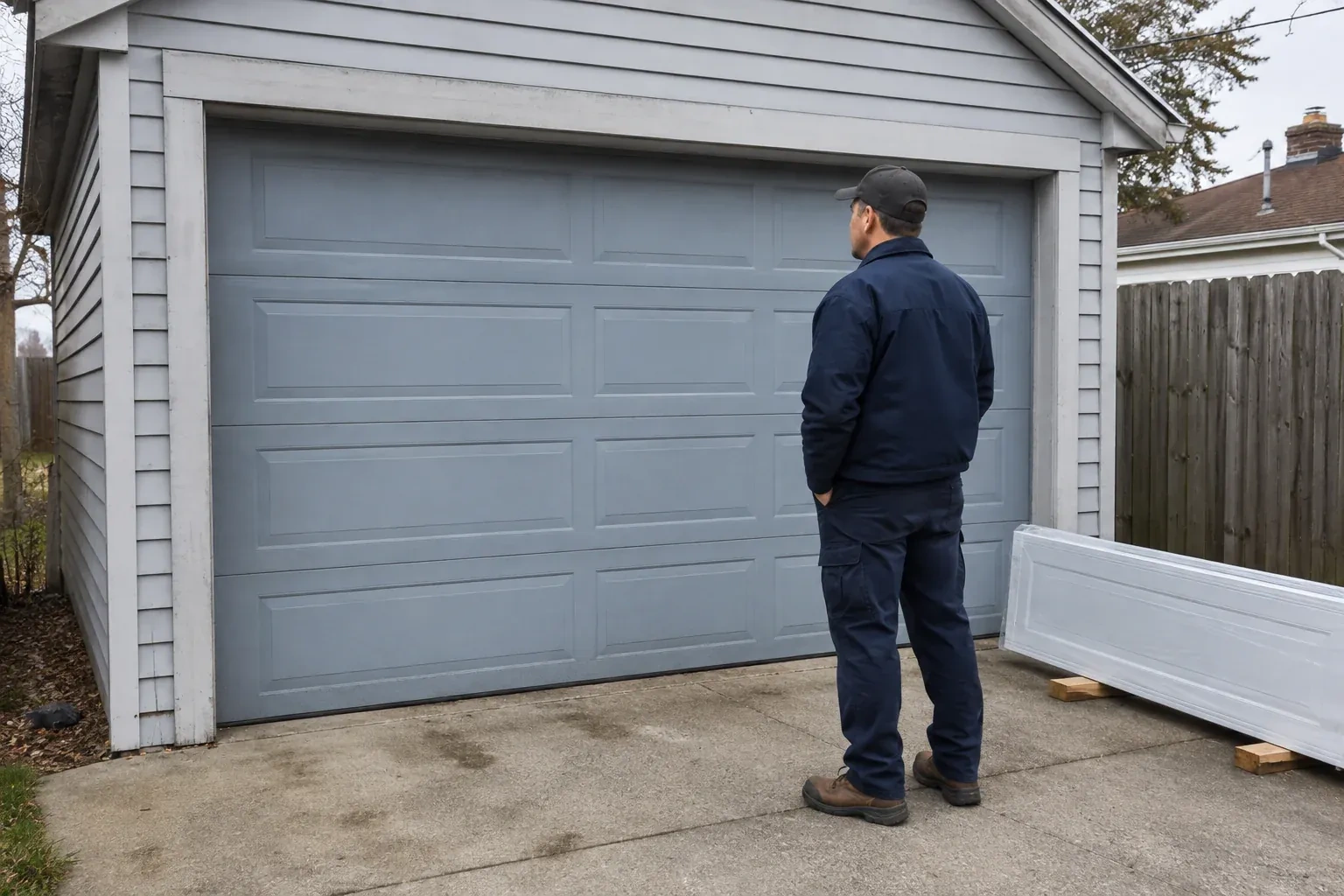
- Insulated Steel Garage Door InstallationYour garage is becoming a workshop, but the thin single-skin door rattles, sweats and lets outdoor…
- Wind-Rated Garage Door ReplacementThe property faces open fields, leaving the garage frontage more exposed than neighbouring homes…
- Carriage-House Garage Door InstallationYour garage door works, yet its broad plain panels feel disconnected from the brick, gables and…
Commercial Sectional Door Repair near you
If your door in Port Colborne is doing something new, there is a service here for it. Grinding usually points to rollers or hinges. A door that will not lift points to a spring or cable. A door that reverses on its own points to sensors or force settings. We diagnose first, then repair.