Port Colborne Garage Door Repair Co.
Issue 2 of 3Garage DoorsPort Colborne, Ontario
Wind-Rated Garage Door Replacement: what the visit covers
An exposed garage can experience both wind pushing the door inward and suction drawing it outward.
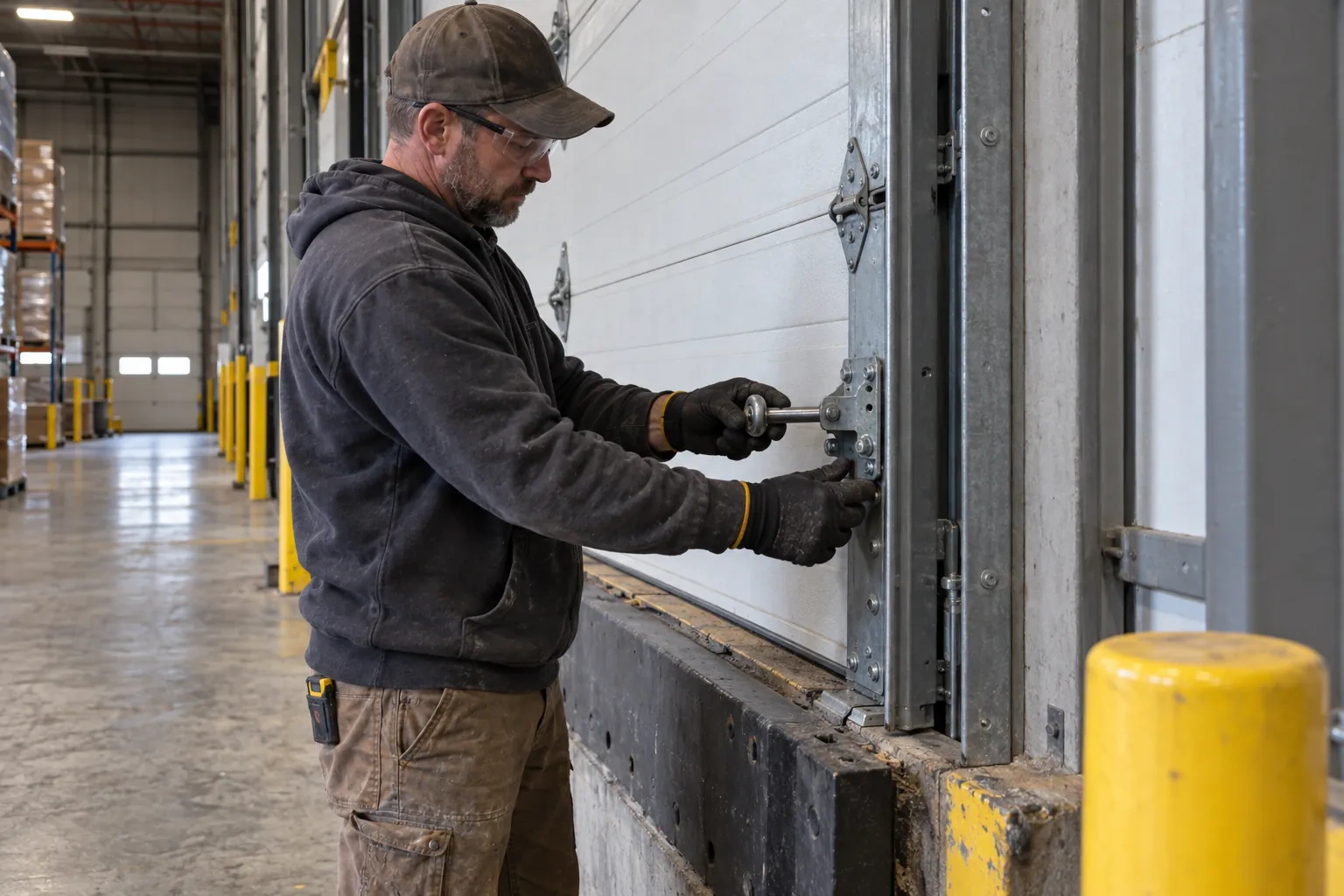
An exposed garage can experience both wind pushing the door inward and suction drawing it outward. A wind-rated replacement is built to address those opposite actions through reinforced panels, horizontal struts, stronger track arrangements, suitable rollers, and secure anchorage. The surrounding header and jambs are examined because the door transfers load into them. Once fitted, the new assembly is carefully balanced and cycled by hand before the opener is adjusted, giving the owner a robust opening that remains practical for everyday arrivals and departures.
Plan around a changed span
For a project turning two bays into one, the inspection begins with the proposed structure rather than the old doors. Drawings for the new beam, posts, jambs, electrical routing, and finished opening are compared with the clearances required by the sectional door. The review separates building work from door installation and identifies who supplies each mounting surface. Coordinating those interfaces early gives the door team straight, sound attachment areas and gives the structural team the dimensions needed to finish the opening accurately.
Connect the operator correctly
After manual travel is satisfactory, a suitable opener is attached through the specified reinforcement bracket rather than directly to an unsupported section skin. The rail, header bracket, door arm, and ceiling supports are aligned for the new door geometry. Travel limits and operating force are reset for the finished assembly. Photoelectric sensors are aligned near the floor, the manual release is demonstrated, and both beam interruption and contact reversal are tested under controlled conditions before powered use begins.
Simple seasonal observation
A few visual checks help preserve the installed configuration. From inside the closed garage, look for loose strut or hinge fasteners, rollers moving out of line, daylight at the seals, corrosion, or changes in the jamb material. Clear leaves and grit from the floor near the tracks, and keep stored items away from moving parts. After freeze-thaw weather, note whether the bottom seal remains seated evenly. Any developing bow, rub, or unusual noise provides a clear reason to arrange a closer inspection.